Small Business Leadership And The Art Of Wearing Multiple Hats
Apr 30, 2026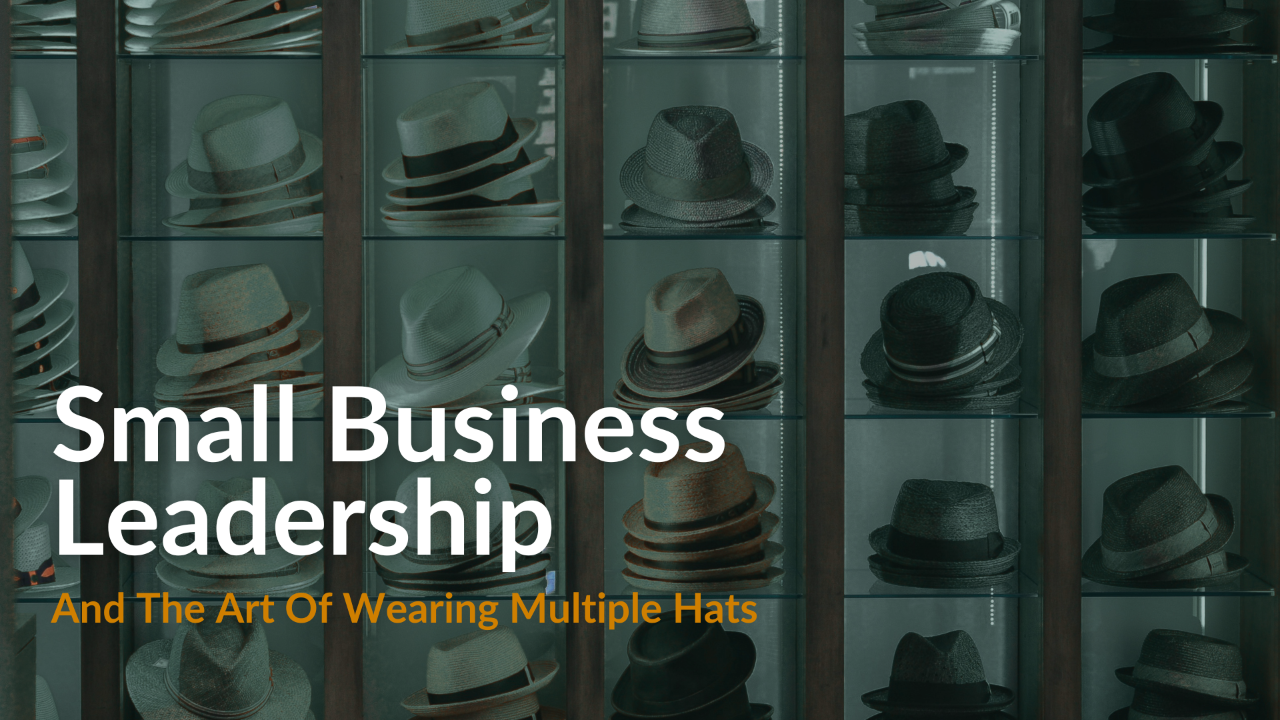
Small business leadership is its own sport entirely. You're not in a corner office with a management team beneath you and a PA filtering your diary. You're the CEO, the HR department, the sales lead, and the person who just fixed the printer.
Basically, you wear all the hats.
The thing is, not only does this expend a lot of mental energy, but it also requires various kinds of leadership. And if nobody taught you which leadership style to reach for in which situation, you're essentially guessing or defaulting to whatever worked last time.
So, dear leader, let’s talk about what small business leadership demands, which leadership styles work for which situations, and the smartest thing you might do this year.
The Small Business Leadership Challenge Nobody Talks About
In large organizations, leadership is compartmentalized, and there are people whose entire job is motivation, people development, or culture. In a small business, that's all on you, so you need a much more versatile toolkit than most leadership training prepares you for.
Because, while most small business leadership training focuses on the fundamentals (which are definitely important), the challenge is knowing how to shift your approach three times before lunch when the occasion calls for it.
Now, let’s discuss six leadership styles to help you do this, bearing in mind that they’re more of a wardrobe than a single outfit. So, you need to understand them all to be able to choose the right one for the right moment.
Six Leadership Styles and When to Use Them
The Autocratic Leadership Style
Command and control. Do this, now, no discussion.
In a small business, the Autocratic leadership style has a very narrow, very specific use case: genuine emergencies. We’re talking time-specific client crises, safety issues, or something that needs an immediate decision.
Used well, and sparingly, it gets things done fast. But used as a default? It creates a team that waits to be told what to do and stops thinking for itself.
In essence, the autocratic leadership style is the hat you put on when the building is on fire. Not every time you walk into the office.
The Relentless
Pace, pressure, performance. Results above everything.
In small businesses, the Relentless leadership style can crop up when deadlines, client expectations, and cash flow pressure are tight. However, while it might achieve some short-term output, it mostly burns people out.
So, not great for the long-term, which probably doesn’t come as a surprise.
The Compassionate Style
Person before performance.
In a small team, where everyone knows each other and the stakes feel personal, compassion builds trust. So much so that it makes people go the extra mile without being asked.
This is what the Compassionate leadership style is all about, and it helps you notice when someone's not quite right. It also helps you to create space for them to say so, because that’s the kind of culture you’ve developed.
The Mentor
Don’t tell them what to do. Ask what they think.
Instead of pointing out what went wrong, the Mentor leadership style allows people to work it out for themselves. For small business owners, this pays enormous dividends because it builds a team that doesn't need you to weigh in on every decision.
Why? Because you develop their capability rather than their compliance. And in a business where your time is the most constrained resource you have, that’s a game changer.
The Consensus
Invite input before decisions are made.
Not everyone gets a vote, but everyone gets a voice with a Consensus leadership style, and everyone commits to the outcome.
In small businesses, where team members wear their own multiple hats and have on-the-ground insight you don't have, this can bring about better decisions. It also builds team buy-in that makes implementation smoother.
However, it’s not all sunshine and rainbows if you use it for things that don't need a group decision. The issue is that many leaders fall into this as a default and seek a consensus when they should make the call themselves.
The Navigator
The gold standard.
Navigators set the destination and trust their people to find the route. They delegate outcomes, not tasks, and act as a compass, not a map. For small business owners, this is the aspiration because it helps you build a team capable of real autonomy.
Of course, getting there takes time, self-awareness, and deliberate development, but it's where transformative small business leadership lives.
Why most small business owners default to the same style under pressure
Under pressure, leaders tend to revert to their default way of doing things. In small businesses, where pressure is more or less a constant, many lead with the same style all day long, whether it fits the situation or not.
Most commonly, this takes the form of Autocratic or Relentless because action can produce short-term results. However, over time, these both erode the culture, trust, and talent that your small business needs to grow.
But the fix isn't to abandon your instincts. It’s to develop the awareness to notice when your default is serving you and when it isn't. Then, it’s about picking the right style for the situation.
Which is where you might benefit from a helping hand.
How small business leadership coaching can help
There's a misconception that leadership coaching is reserved for executives at huge companies with development budgets bigger than your annual turnover. However, there are plenty of options for those leading resource-constrained organizations, too.
What’s more, the right leadership coaching will help you understand where your default style sits and which situations call for something different. It’ll also help you build deliberate habits that make better leadership instinctive.
Crucially, it’ll also give you the kind of outside perspective that's almost impossible to generate yourself, no matter how self-aware you are.
And the return on that investment is measurable. It shows in team performance, in how much you're able to delegate without everything piling back on your desk, and in your ability to think strategically rather than spending everyday firefighting or fixing that printer.
Which is a relief come the end of the week. Trust us.
Final thoughts
Let’s not beat around the bush; small business leadership is hard.
And not because the leadership principles are any different from those in larger organizations, but because you're applying them with fewer resources and significantly less support. You're also expected to be strategic and operational, visionary and detail-oriented, decisive and collaborative, all at the same time. Which is obviously not an easy task.
The good news is that none of this is set in stone or unchangeable. And with the right leadership training for small business owners, you can develop the awareness and habits that make leading less like a juggling act.