The Rise of Human Centered Leadership (And Why It Matters More Than Ever)
Apr 16, 2026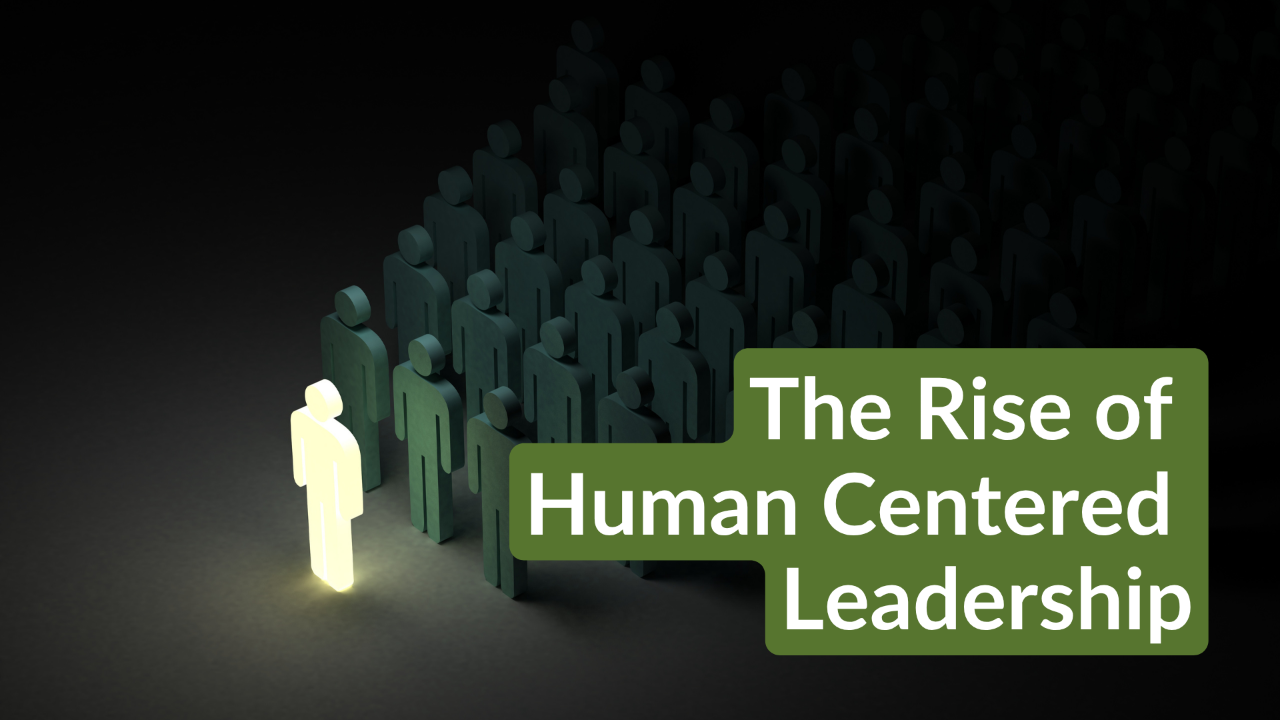
Human centered leadership has had quite the glow-up. A decade ago, it was a term you’d hear and forget about after an HR conference. Today, it's what separates the leaders that people want to follow from the ones their teams are quietly updating their LinkedIn profiles to escape.
This is largely down to how workplaces have changed in recent years. Hybrid working, remote teams, and general work culture have all shifted, creating a workforce that expects to be seen as humans rather than just units of output.
But where does human-centered leadership come into all of this, and can you adapt your leadership style to accommodate it? These are just the kinds of questions we’ll answer in today’s article, so buckle up and let’s get started.
How the World of Work Has Changed
Let's set the scene. You’re in a traditional office in the early noughties. You’re the leader. And you monitor progress by walking around and asking questions at the water cooler. Friends is the most popular TV show on air, Blockbuster reigns supreme, and your team clocks in at 9 and leaves at 5 every single day. No questions asked.
Halcion days for some, but today, the picture is much different.
Millions of people now work from home, split their time across time zones, and collaborate with colleagues they've never met in person. The corridor conversation, the drop-by-your-desk check-in, and the ability to read the room have been complicated or removed by the shift to hybrid and remote working.
And yet, some leaders are still trying to manage people through proximity and pressure. They’re still relying on visibility as a proxy for performance and still wondering why engagement is low and turnover is high.
Add artificial intelligence into the mix, and things get even more interesting. Because, as AI handles more of the repetitive, task-based layer of work, what becomes irreplaceable is the human layer of relationships, trust, and development.
The leaders who understand all of this are already ahead. The ones who haven't worked it out yet are slowly becoming the bottleneck in their own organizations.
What is Human Centered Leadership and Why Does It Matter?
Human-centered leadership theory draws from decades of research into what drives employee performance, retention, and engagement. The short version is that it isn't fear, pressure, or surveillance; it's autonomy, purpose, and growth.
So, the human-centered leadership model is rooted in a fairly straightforward idea. It’s that sustainable results come from cultures where people feel trusted, seen, developed, and valued.
In our experience, the leaders who build these conditions consistently outperform those who don't. Their teams also stay with their organizations longer, they contribute more, and they don't spend half the working day scrolling job ads.
Six Leadership Styles to Get Your Head Around
At MDL, we work with six distinct leadership styles, running on a spectrum from least desirable to most desirable. They are, in that order: Autocratic, Relentless, Compassionate, Mentor, Consensus, and Navigator.
Let’s explore them in more detail:
The Autocratic and Relentless Leaders
The Autocratic Leader commands, controls, and expects compliance. There's no discussion, no collaboration, and no room for creative thinking. You do as you're told, or you do it somewhere else. In short, these guys prioritize output over people.
This approach can get short term results on rare occasions, but in the long term, it builds teams that wait to be told what to do. As a result, innovation is nonexistent, and the business is a revolving door of team members.
The Relentless Leader is obsessed with pace, pressure, and performance, and people aren't people, they're producers. This leads to results being the only metric, which makes burnout inevitable.
Both styles have their moments in a genuine crisis or an emergency that needs decisive action. But as a default, they cause more damage than they fix, especially in a modern working environment of hybrid teams where trust and autonomy are integral. In essence, they are the complete opposite of human centered leadership.
Four Leadership Styles That Focus on Human Centered Leadership
Enough of the doom and gloom of Relentless and Autocratic Leadership, because the remaining four styles, Compassionate, Mentor, Consensus, and Navigator, form the heart of human centered leadership.
The Compassionate Leader
Sees the person before the performance. They notice the furrowed brow in the Monday meeting, the extra hours nobody acknowledged, and the tiredness behind someone's smile.
In hybrid teams, where it's easier for people to struggle invisibly, this style is invaluable. It builds psychological safety and the kind of environment where people speak up, flag problems early, and don't waste energy pretending everything's fine.
The Mentor Leader
Invests in people's long-term development rather than short-term delivery. Instead of telling people what to do, they ask what they think. And instead of pointing out what went wrong, they guide people to discover it for themselves.
This style works beautifully for remote teams because it builds capability and confidence that doesn't depend on a leader being present. The result is a team that doesn't need to run every decision up the chain, which is gold dust for leaders.
The Consensus Leader
Invites input before decisions are made. It’s not democracy, which is everyone getting a vote regardless of expertise, but genuine buy-in where people can understand why we're doing something, so they fully commit. This is particularly helpful in organizations where teams work across different locations and time zones.
The Navigator
AKA the gold standard. Navigator Leaders set the destination and trust their people to find the route. They delegate outcomes, not tasks, and they act as a compass to guide teams towards their goals. They know that people don't do their best work when they're told exactly what to do, but when they feel trusted, challenged, and connected to the mission.
When it comes to human-centered leadership, the Navigator is the epitome of the philosophy in action.
Why Human-Centered Leadership is No Longer Optional
Human-centered leadership should be a strategic decision with measurable consequences. Organizations that lead this way retain talent, build engaged teams, and create cultures where performance is self-sustaining rather than leader dependent.
Organizations that don't, spend enormous amounts of time and money replacing good people, firefighting preventable problems, and wondering why the strategy keeps faltering.
This is largely down to the shift to hybrid and remote working, which has raised the stakes considerably. Because when you can't rely on physical presence, what you're left with is culture, which is shaped, almost entirely, by how leaders lead.
So, if your default style sits at the Autocratic or Relentless end of the spectrum, your culture will reflect that. And in a world where people have more choice than ever about where and how they work; they'll disappear in a puff of smoke before you know it.
The intersection of artificial intelligence and human-centered leadership adds another dimension to all of this. Because as AI takes on more of the cognitive load, the distinctly human elements of leadership become even more important. And empathy, judgment, development, and trust are all things AI can’t replicate.
What’s more, they’re the things that make you indispensable as a leader, and they make your team want to do their best work for you.
How to Develop Your Human-Centered Leadership Style
The first step towards human centered leadership is awareness. Before you can develop, you need to understand your own patterns and the leadership style you default to.
- What's your go-to under stress?
- Where are you strong?
- Where could you improve?
- Where do you fall into habits that don't serve your people?
From here, you’ll find real, sustainable growth in your human-centered organizational leadership capabilities. All of it stemming from understanding your style and how to build habits that make your best leadership instinctive.
That's exactly what our Leadership Styles Profile Assessment is designed for. The Assessment reveals your default style across all six leadership styles, so you can see yourself clearly and start making intentional choices. It’s the most direct route from wherever you are now to the kind of human-centered leadership your teams deserve.
Final Thoughts
Human-centered leadership is a decision you make, every day, in every conversation, and with every person on your team. And in a world where workplaces are changing rapidly and where the best people have no shortage of options, how you lead matters more than ever.