Embracing Uncertainty: A Leader's Guide to Charting the Unknown
Jun 04, 2026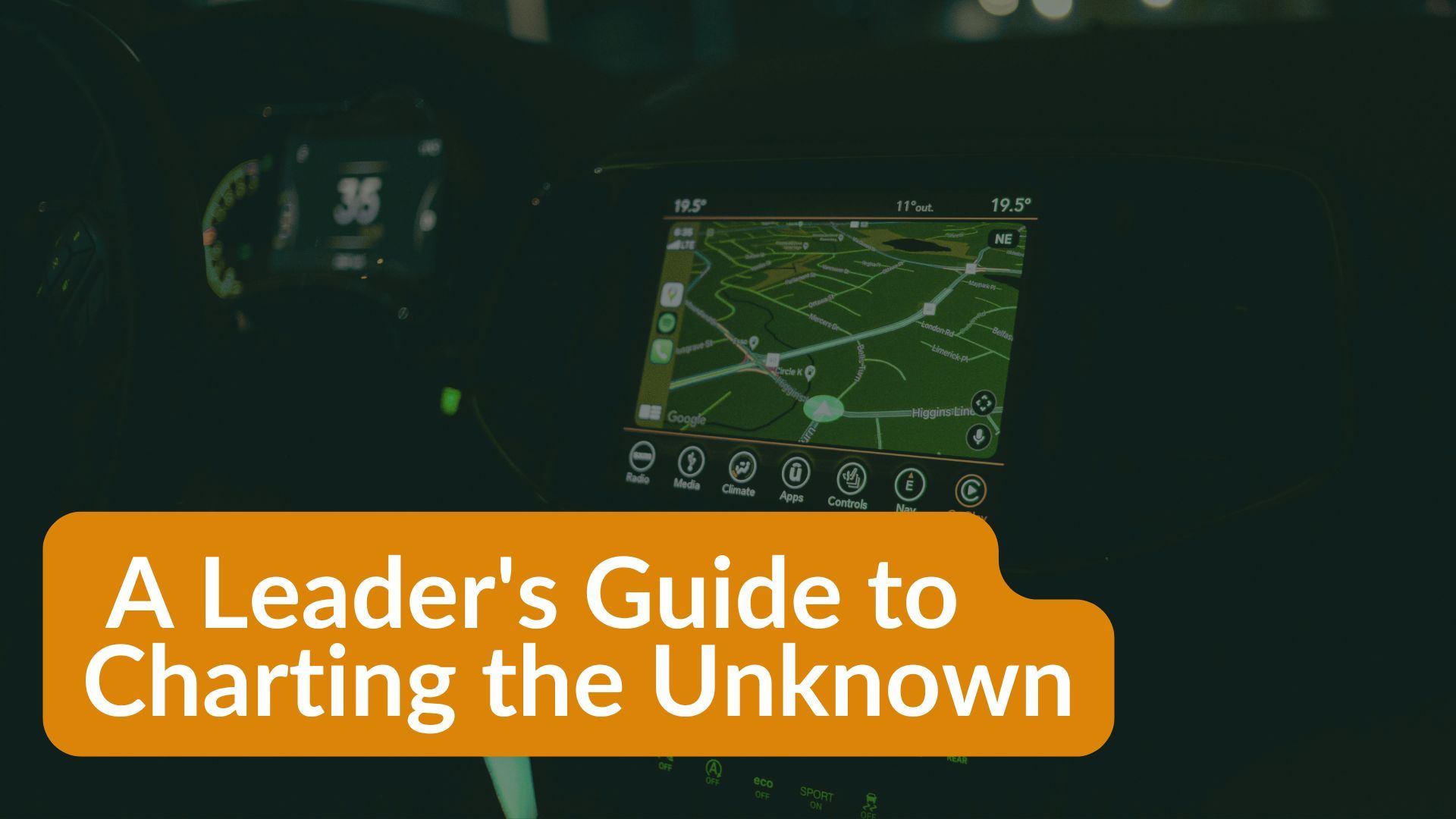
Imagine navigating a winding mountain road. You have a destination, but the route is filled with unexpected turns, sudden drops, and the odd breathtaking view. Leadership is just like this: a journey marked by surprises that test your resilience and adaptability. The key? Embracing uncertainty instead of doing a U-turn and heading home.
In this article, we'll explore what embracing uncertainty looks like. We’ll also explain why it's one of the most important qualities you can develop as a leader, and how to build the skills that turn the unknown into a competitive advantage.
Let’s kick things off on the battlefield.
Why Uncertainty and Leadership Go Hand in Hand
The US Army War College coined a useful acronym in the late 1980s: VUCA. It was developed to describe the conditions of modern combat, but it applies just as well to the environments leaders operate in.
For those that don’t know, VUCA stands for:
- Volatile
- Uncertain
- Chaotic
- Ambiguous
You don't need to be running a battalion or a billion-dollar business to know what VUCA feels like. In fact, you’ve almost definitely already felt it yourself. This is because every leader, at every level, makes decisions at speed, often with incomplete information, in conditions that change without warning.
So, it's not a case of if you'll face uncertainty, because, you most certainly will. It's how well you can move through that uncertainty.
Learn from Those Who Embraced Uncertainty
History lesson time.
Alexander Graham Bell set out to improve the telegraph and ended up inventing the telephone. His path was full of failures, but his openness to where the process led him produced something neither he nor anyone else had planned for. And it changed the world.
Bell's story is a reminder that sometimes the best outcomes arrive through the doors you didn't intend to open. And that’s why it’s incredibly relevant for leaders.
Oprah Winfrey's journey to stardom was similarly unscripted. She navigated enormous personal adversity in an industry that wasn't built for her. Her resilience and adaptability not only helped her survive but they also shaped the force of nature she became.
This is what open-minded leadership is all about: being willing to let the route evolve while keeping the destination in view.
Darwin made the same point, albeit a tad more scientifically. Because survival of the fittest, as it's commonly misunderstood, isn't really about the strongest winning. It's about the most adaptable thriving.
The same applies to businesses and to the leaders running them. And it’s why adaptability and flexibility in leadership are absolutely fundamental qualities.
Now, how about another acronym?
The FUD Factor
Let’s ask a simple question: why do so many leaders struggle with leadership uncertainty, even if they know that navigating it is a big part of the job?
The short answer is the FUD factor, which stands for:
- Fear
- Uncertainty
- Doubt
Our brains are wired for comfort and familiarity, so they do everything they can to resist the discomfort of uncertainty. However, growth is never found inside the comfort zone, and if you want to lead well, you have to get comfortable being uncomfortable.
This is because great leadership is, by its nature, uncomfortable. Sorry about that!
But don't get us wrong, the leaders who handle uncertainty well aren't fearless machines. They just feel the fear and do it anyway. Because embracing uncertainty doesn't mean pretending it isn't there. It’s about not letting it make the decisions for you.
What Flexibility in Leadership Looks Like
Flexibility in leadership is sometimes described as a soft skill, but it's one of the most practical things a leader can develop.
Here's what it looks like when it's working:
Being open-minded
The leaders who navigate uncertainty like pros are the ones who can hold a plan loosely enough to let it change. This is known as open-minded leadership, or adaptable leadership, which means being willing to consider new information, new approaches, and new directions, even if they deviate from the plan you created.
Cultivating resilience
Resilience is the capacity to absorb a setback and keep moving. For leaders, it means keeping your perspective when things go wrong and learning from failure rather than being defined by it.
This is because every setback, handled well, is a stepping stone. If handled poorly, however, it’s more of a trap door. Which nobody needs.
Encouraging experimentation
The leaders who build motivated teams are the ones who make it safe to try things that might not work. Because when failure is treated as information rather than incompetence, teams take better risks and find better solutions.
Reflecting and adapting
After navigating an unexpected challenge, the leaders who grow are the ones who examine the experience honestly. What worked? What didn't? What would you do differently? Continuous reflection is how experience becomes wisdom, rather than just time served with nothing learned.
Now, who fancies yet another acronym?
The OODA Loop: A Framework for Moving Through Uncertainty
The OODA loop is Colonel John Boyd's most enduring contribution to leadership thinking, and it goes like this:
- Observe
- Orient
- Decide
Pretty simple, but the leaders who can cycle through these four stages most quickly, taking in new information, making sense of it, deciding on a course of action, and executing it, will outperform the ones still gathering information while the situation moves on without them.
This is a useful frame for leadership uncertainty because it replaces paralysis with process. The key is observing clearly, orienting accurately, deciding deliberately, and acting with conviction.
Embracing uncertainty as a leader
Embracing uncertainty as a leader isn't a one-time decision. It's a daily practice, built through self-awareness, reflection, and a commitment to growing through discomfort.
If you want to understand how your current mindset is shaping the way you respond to the unknown, the Growth Mindset Profile Assessment is a great place to start. It gives you a clear, honest picture of where your mindset sits across the dimensions that matter most, and where the biggest development opportunities are.