Systems Leadership vs Systemic Leadership In Business
Jun 15, 2026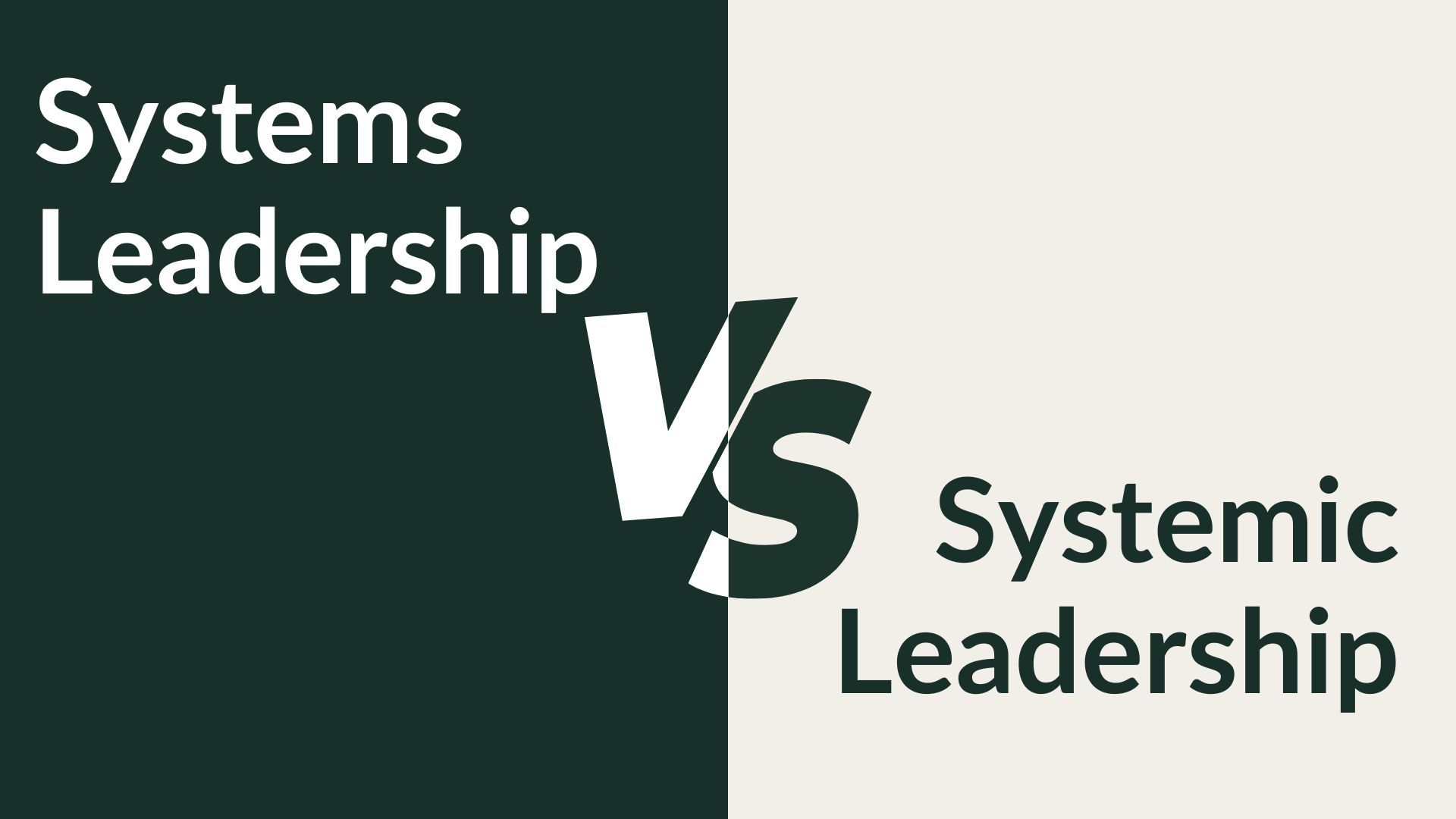
Systems leadership and systemic leadership are closely connected in a business context. One sees the organization as interconnected parts, and the other focuses on how your leadership shapes these parts.
See? Two sides of the same coin. Two peas in an organizational pod. Birds of a feather. And so on and so forth.
Now, either one can be a powerful belief system on its own, but when used together as an integrated leadership system? Well, that’s a recipe for some good old-fashioned business growth and leadership development.
In this article, we'll look at what both leadership systems are when it comes to business. We’ll also explain why having a coherent leadership system is so important and introduce you to a tried and tested system you can use yourself.
What is Systems Leadership in Business?
Systems leadership focuses on the organization as a whole, rather than individual teams or functions. It treats the business as an interconnected system where departments, processes, and people influence each other. So, problems are rarely isolated, and decisions in one area affect others.
As a result, a systems leader doesn't manage a single part of an organization. Why? Because they understand that their decisions affect the whole. So, their goal is instead to build collaboration, create shared purpose across departments, and lead through influence and alignment rather than instruction alone.
So, it’s goodbye hierarchy, and hello holisticness. And yes, that is a real word.
What is Systemic Leadership?
Systemic leadership is essentially the inward-looking sibling of systems leadership, where you ask how those systems reflect the job you’re doing. It means focusing on your own behavior, mindset, and patterns. Again, not in isolation, but how they ripple through your organization.
You therefore understand that a decision made at the top doesn't just affect the immediate outcome. It shapes behavior several layers down, influences culture, and can have consequences that don't show up for months.
All in all, this is a more expansive way of thinking about leadership, and one that the most effective leaders develop as they move from managing to becoming a true leader.
How to Combine Both as an Integrated Leadership System
Now, systems leadership and systemic leadership are powerful philosophies, but philosophies without structure tend to stay theoretical. What makes them real is having an effective, integrated leadership system underpinning them.
Ideally, this would be a deliberate, consistent framework that develops you, your people, and your business simultaneously rather than in isolation. This kind of system separates marginal gains from meaningful ones and helps you prevent problems rather than living in reactive mode.
So, instead of jumping into action when a problem surfaces or something unsavory hits the fan, you have a system that helps you develop more effectively with a compounding effect.
Sounds like the stuff of dreams, but here’s the fun part: we’ve developed that exact leadership system. Just for you.
Introducing The Five Levers of Leadership Framework
Our Five Levers of Leadership Framework is built around the following:
- People development
- Company development
- Self-development
- Strategy development
- Leadership development.
Each is a distinct area of focus, and each one matters on its own, but the reason we call them levers rather than pillars or principles is that they're interlocked. So, when one lever sticks, the others feel it, and when one moves well, it creates momentum across the rest.
Self-development, for example, directly affects how you develop yourself. Of course it does. But it also affects how you develop your people, how you think about strategy, and how you build a business that doesn't depend entirely on you.
Building Your Very Own Leadership System
The practical starting point for any leader who wants to build an integrated leadership system is self-awareness. You can't improve what you can't see, and most leaders have a much clearer picture of the business around them than of their own leadership gaps.
This is why leadership journaling is so important. Writing regularly across all five pillars, asking what's working, what isn't, and where the one-percent improvements are, is how leadership development becomes a daily discipline.
And it’s this understanding of where you are across the five levers that gives you the perfect foundation to build from. Then, from this point, an effective leadership system is built through consistency rather than intensity. This means utilizing daily reflection, deliberate development, and discipline. All of which compound and help you build healthier habits over time.
Final Thoughts
Systems leadership and systemic leadership give you a more powerful way to think about your role and your organization. But thinking differently only produces results when it's backed by an integrated leadership system that develops you consistently and deliberately.
The My Daily Leadership Membership is built specifically around the Five Levers Framework, and it's designed to give you the exact system we’re talking about.
So, whether you're looking to lead more effectively amid complexity, develop your team, or build a business that doesn't depend entirely on you, you can find the structure, tools, and support to make growth consistent rather than occasional.
Click here to learn more about the My Daily Leadership Membership.